


Mercury Retrograde
The way retrograde planets seem to affect our affairs varies from planet to planet. In Mercury’s
case, it means often looking back at Mercury-ruled things – communications, contracts, and so
on.
Keep in mind that Mercury correlates with Hermes, the original trickster, and you’ll understand
how cleverly disguised some of these errors can be. Communications become confused, or are
delayed. Letters are lost of sent to Auckland instead of Oakland. Or they end up under the car
seat for three weeks.
We sign a contract or agreement and find out later that we didn’t have al the correct information,
and what we signed was misleading in some way. We try repeatedly to reach someone via
telephone but can never catch him or her at home, or our communications devices themselves
break down or garble information in some way.
We feel as if our timing is off, so short trips often become more difficult. We leave the
directions at home or write them down incorrectly. We’re late for appointments due to
circumstances beyond our control, or we completely forget about them.
Is there a constructive use to this time period? Yes. Astrologer Erin Sullivan has noted that the
ratio of time Mercury spends moving retrograde and direct corresponds beautifully with the
amount of time we humans spend asleep and awake. So this period seems to be a time to take
stock of what’s happened to us over the past three months, and assimilate our experiences.
A rule of thumb with Mercury retrograde is to try to confine activities to those that have “re”
attached to the beginning of a word: reschedule, repair, return, rewrite, redecorate, restore,
replace, renovate, renew, for example.
The way retrograde planets seem to affect our affairs varies from planet to planet. In Mercury’s
case, it means often looking back at Mercury-ruled things – communications, contracts, and so
on.
Keep in mind that Mercury correlates with Hermes, the original trickster, and you’ll understand
how cleverly disguised some of these errors can be. Communications become confused, or are
delayed. Letters are lost of sent to Auckland instead of Oakland. Or they end up under the car
seat for three weeks.
We sign a contract or agreement and find out later that we didn’t have al the correct information,
and what we signed was misleading in some way. We try repeatedly to reach someone via
telephone but can never catch him or her at home, or our communications devices themselves
break down or garble information in some way.
We feel as if our timing is off, so short trips often become more difficult. We leave the
directions at home or write them down incorrectly. We’re late for appointments due to
circumstances beyond our control, or we completely forget about them.
Is there a constructive use to this time period? Yes. Astrologer Erin Sullivan has noted that the
ratio of time Mercury spends moving retrograde and direct corresponds beautifully with the
amount of time we humans spend asleep and awake. So this period seems to be a time to take
stock of what’s happened to us over the past three months, and assimilate our experiences.
A rule of thumb with Mercury retrograde is to try to confine activities to those that have “re”
attached to the beginning of a word: reschedule, repair, return, rewrite, redecorate, restore,
replace, renovate, renew, for example.



| The Moon's Influence |
| Retrograde Planets |
| Divination: Trelawney's Classroom |


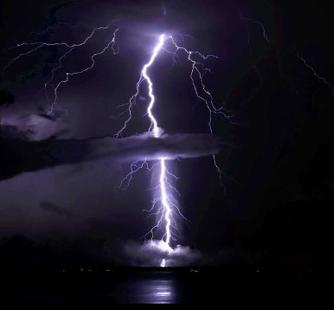
| "Lightning Over New York City" photography by Christopher Imperato. All book series, movies, and images are owned by their authors, creators, publishers & production companies. No copyright infringement intended of any and all source material. No profits were made from this site. |
| Copyright © 2007 | www.booksandwands.com | All Rights Reserved |
Harry Potter
Arithmancy
Divination
Character Arcs
Muggle Studies
Under the Influence
Other Projects
Arithmancy
Divination
Character Arcs
Muggle Studies
Under the Influence
Other Projects
Hunger Games
Book Notes
Movie Review
Book Notes
Movie Review
The Hobbit
Book Notes
Movie Review
Book Notes
Movie Review
Percy Jackson
Book Notes
Movie Review
Book Notes
Movie Review
Twilight
Book Notes
Movie Stills
Book Notes
Movie Stills
Narnia
Book Notes
Movie Review
Book Notes
Movie Review
Retrograde literally means “backwards.” Although none of the planets ever really throw their
engines in reverse and move backward, all of them, except for the Sun and Moon, appear to do
so periodically, from our perspective here on Earth. What’s happening is that we’re moving
either faster or slower than the planet that’s in retrograde, and since we have to look over our
shoulder to see it, we refer to it as retrograde.
engines in reverse and move backward, all of them, except for the Sun and Moon, appear to do
so periodically, from our perspective here on Earth. What’s happening is that we’re moving
either faster or slower than the planet that’s in retrograde, and since we have to look over our
shoulder to see it, we refer to it as retrograde.
Retrograde Motion of Other Planets
With Venus retrograde, relationships and money matters are delayed or muddled.
With Mars (retrograde for eleven weeks, and then direct for twenty-two months), actions
initiated are often rooted in confusion or end up at cross-purposes to our original intentions.
Typically, under a Mars retrograde, the aggressor or initiator of a battle is defeated.
Jupiter retrogrades for four months and is direct for nine months. Saturn retrogrades for about
the same amount of time. Each of the outer planets – Uranus, Neptune, and Pluto – stays
retrograde for about six or seven months of every year.
In general, remember that actions ruled by a particular planet quite often need to be repeated or
done over when that planet is in retrograde. Just make sure that whatever you’re planning is
something you don’t mind doing twice.
With Venus retrograde, relationships and money matters are delayed or muddled.
With Mars (retrograde for eleven weeks, and then direct for twenty-two months), actions
initiated are often rooted in confusion or end up at cross-purposes to our original intentions.
Typically, under a Mars retrograde, the aggressor or initiator of a battle is defeated.
Jupiter retrogrades for four months and is direct for nine months. Saturn retrogrades for about
the same amount of time. Each of the outer planets – Uranus, Neptune, and Pluto – stays
retrograde for about six or seven months of every year.
In general, remember that actions ruled by a particular planet quite often need to be repeated or
done over when that planet is in retrograde. Just make sure that whatever you’re planning is
something you don’t mind doing twice.










| For Nerds. By Nerds. |


Moon Void-of-Course
The Moon orbits Earth in about twenty-eight days, moving through each of the signs in about
two days. As she passes through the 30 degrees of each sign, she “visits” with the planets in
order by forming angles or aspects with them. Because she moves one degree in just two to two-
and-a-half hours, her influence on each planet lasts only a few hours.
As she approaches the late degrees of the sign she’s passing through, she eventually forms what
will be her final aspect to another planet before leaving the sign. From this point until she
actually enters the new sign, she is referred to as void-of-course (v/c).
The Moon is the emotional “tone” of the day, carrying feelings with her particular to the sign
she’s “wearing” at the moment. She rules instincts.
After she has contacted each of the planets, she symbolically “rests” before changing her
costume, so her instincts are temporarily on hold. It’s during this time that many people feel
“fuzzy” or “vague” – scattered, even. Plans or decisions we make now will usually not pan out.
Without the instinctual “knowing” the Moon provides as she touches each planet, we tend to be
unrealistic or exercise poor judgment.
The traditional definition of the void-of-course Moon is that “nothing will come of this,” and it
seems to be true. Actions initiated under a void-of-course Moon are often wasted, irrelevant, or
incorrect – usually because information needed to make a sound decision is hidden or missing,
or has been overlooked.
Now, although it’s not a good time to initiate plans, routine tasks seem to go along just fine.
However, this period is really ideal for what the Moon does best – reflection. It’s at this time
that we can assimilate what has occurred over the past few days. Use this time to meditate,
ponder and imagine. Let your conscious mind rest and allow yourself to feel.
On the lighter side, remember that there are other good uses for the void-of-course Moon. This
is the time period when the universe seems to be most open to loop-holes. It’s a great time to
make plans you don’t want to fulfill or schedule things you don’t want to do. In other words,
like the song says, “To everything, there is a season.” Even void-of-course Moons.
The Moon orbits Earth in about twenty-eight days, moving through each of the signs in about
two days. As she passes through the 30 degrees of each sign, she “visits” with the planets in
order by forming angles or aspects with them. Because she moves one degree in just two to two-
and-a-half hours, her influence on each planet lasts only a few hours.
As she approaches the late degrees of the sign she’s passing through, she eventually forms what
will be her final aspect to another planet before leaving the sign. From this point until she
actually enters the new sign, she is referred to as void-of-course (v/c).
The Moon is the emotional “tone” of the day, carrying feelings with her particular to the sign
she’s “wearing” at the moment. She rules instincts.
After she has contacted each of the planets, she symbolically “rests” before changing her
costume, so her instincts are temporarily on hold. It’s during this time that many people feel
“fuzzy” or “vague” – scattered, even. Plans or decisions we make now will usually not pan out.
Without the instinctual “knowing” the Moon provides as she touches each planet, we tend to be
unrealistic or exercise poor judgment.
The traditional definition of the void-of-course Moon is that “nothing will come of this,” and it
seems to be true. Actions initiated under a void-of-course Moon are often wasted, irrelevant, or
incorrect – usually because information needed to make a sound decision is hidden or missing,
or has been overlooked.
Now, although it’s not a good time to initiate plans, routine tasks seem to go along just fine.
However, this period is really ideal for what the Moon does best – reflection. It’s at this time
that we can assimilate what has occurred over the past few days. Use this time to meditate,
ponder and imagine. Let your conscious mind rest and allow yourself to feel.
On the lighter side, remember that there are other good uses for the void-of-course Moon. This
is the time period when the universe seems to be most open to loop-holes. It’s a great time to
make plans you don’t want to fulfill or schedule things you don’t want to do. In other words,
like the song says, “To everything, there is a season.” Even void-of-course Moons.
The Moon Cycle
As the Moon goes along her way, she magically appears and disappears, waxing to full from the
barest sliver of a crescent just after she’s new, then waning back to her invisible new phase
again. The four quarters – the New Moon, the second quarter, the Full Moon, and the fourth
quarter – correspond to the growth cycle of every living thing.
The Quarters
First Quarter
This phase begins when the Moon and the Sun are conjunct one another in the sky. At the
beginning of the phase, the Moon is invisible, hidden by the brightness of the Sun as they travel
together. The Moon is often said to be in her “dark phase” when she is just new. The New
Moon can’t actually be seen until 5-1/2 to 12 hours after its birth.
Toward the end of the first quarter phase, as the Moon pulls farther away from the Sun and she
begins to wax toward the second quarter stage, a delicate silver crescent appears. This time
corresponds to all new beginnings; this is the best time to begin a project.
Second Quarter
The second quarter begins when the Moon has moved 90 degrees away from the Sun. At this
point, the waxing Moon rises at about noon and sets at about midnight. It’s at this time that she
can be seen in the western sky during the evening hours, growing in size from a crescent to her
full beauty. This period corresponds to the development and growth of life, and to projects that
are coming close to fruition.
Third Quarter
This phase begins with the Full Moon, when the Sun and Moon are opposite one another in the
sky. It’s now that she can be seen rising in the east at sunset, a bit later each night as this phase
progresses. This time corresponds to the culmination of plans and to maturity.
Fourth Quarter
This phase occurs when the Moon has moved 90 degrees past the full phase. She is decreasing
in light, rises at midnight, and can be seen now in the eastern sky during the pre-dawn hours.
She doesn’t reach the highest point in the sky until very early in the morning. This period
corresponds to “disintegration” – a symbolic “drawing back” to reflect on what’s been
accomplished. It’s now time to recognize, clear the boards, and plan for the next New Moon
stage.
As the Moon goes along her way, she magically appears and disappears, waxing to full from the
barest sliver of a crescent just after she’s new, then waning back to her invisible new phase
again. The four quarters – the New Moon, the second quarter, the Full Moon, and the fourth
quarter – correspond to the growth cycle of every living thing.
The Quarters
First Quarter
This phase begins when the Moon and the Sun are conjunct one another in the sky. At the
beginning of the phase, the Moon is invisible, hidden by the brightness of the Sun as they travel
together. The Moon is often said to be in her “dark phase” when she is just new. The New
Moon can’t actually be seen until 5-1/2 to 12 hours after its birth.
Toward the end of the first quarter phase, as the Moon pulls farther away from the Sun and she
begins to wax toward the second quarter stage, a delicate silver crescent appears. This time
corresponds to all new beginnings; this is the best time to begin a project.
Second Quarter
The second quarter begins when the Moon has moved 90 degrees away from the Sun. At this
point, the waxing Moon rises at about noon and sets at about midnight. It’s at this time that she
can be seen in the western sky during the evening hours, growing in size from a crescent to her
full beauty. This period corresponds to the development and growth of life, and to projects that
are coming close to fruition.
Third Quarter
This phase begins with the Full Moon, when the Sun and Moon are opposite one another in the
sky. It’s now that she can be seen rising in the east at sunset, a bit later each night as this phase
progresses. This time corresponds to the culmination of plans and to maturity.
Fourth Quarter
This phase occurs when the Moon has moved 90 degrees past the full phase. She is decreasing
in light, rises at midnight, and can be seen now in the eastern sky during the pre-dawn hours.
She doesn’t reach the highest point in the sky until very early in the morning. This period
corresponds to “disintegration” – a symbolic “drawing back” to reflect on what’s been
accomplished. It’s now time to recognize, clear the boards, and plan for the next New Moon
stage.
 |
 |
 |
 |
 |
 |
 |
 |
 |